Baton
📅 2026 Update: Changes in Baton Use and Policies in Law Enforcement
Since the original article was published, there have been significant updates regarding police baton use and training. Notably, new policies have been introduced, and research has shed light on how these tools are used across the country. The earlier article continues further down the page, providing foundational knowledge on this topic.
📜 Providence Police Department's New Policy
On February 11, 2026, the Providence Police Department released General Order 310.06. This order outlines updated guidelines for the use of batons by officers. It emphasizes the need for proper training and adherence to department protocols.
📊 Study on Use-of-Force Policies
In June 2025, the Stanford Center for Racial Justice published a study examining police use-of-force policies in 100 U.S. cities. This research highlighted significant differences in how departments regulate baton use. Understanding these variations can help clarify local enforcement practices.
👮 Officer Training Requirements
To carry and use batons, officers must complete department-authorized training. This training is essential for ensuring that officers understand how to use batons appropriately in various situations. It enhances their ability to apply less-lethal force effectively.
🕒 Training Duration
The length of baton training programs varies between police departments. Some departments require several days of instruction. This variability can impact how quickly officers are trained and ready to use these tools in their duties.
📌 Key Points Summary
- New Policies: Providence Police updated their baton guidelines in 2026.
- Research Findings: A significant study analyzed variations in baton use across cities.
- Training Required: Officers must complete training to use batons safely.
- Training Duration Varies: Training programs differ in length by department.
💡 Tips for Baton Use in Law Enforcement
Reviewing the specifics of your situation with an attorney is important for understanding the rules around baton use.
📋 Follow Department Policies
Every police department has specific policies regarding baton use. Officers must strictly adhere to these guidelines to ensure compliance and accountability.
📅 Regular Training Sessions
Departments should hold regular training sessions on baton use. This practice not only keeps officers updated on policies but also reinforces safe usage techniques.
🔍 Understand Use-of-Force Continuum
Batons are classified as a less-lethal option in the use-of-force continuum. Officers must understand their position in this continuum to make informed decisions during encounters.
⚖️ Know Legal Standards
The "objective reasonableness" standard from *Graham v. Connor* guides baton use. Officers must assess whether the force applied is appropriate in each situation.
📚 Stay Informed on State Laws
State laws regarding civilian possession of batons vary widely. Officers should be aware of these laws, especially when interacting with civilians who may possess batons.
🏆 Baton Services Ranked by User Reviews (2026)
This section highlights services related to legal assistance and resources connected to law enforcement and baton use. The order follows Trustpilot data checked in October 2026. Ratings can change, and star ratings represent only one aspect of user experience, as unhappy customers tend to leave more reviews.
🥇 1. LegalZoom
LegalZoom has been rated 4.2 out of 5 by 5,000 reviewers. It is known for its online legal document services and affordable legal assistance. However, some users report problems with customer service, which could affect overall satisfaction.
🥈 2. LegalMatch
LegalMatch holds a Trustpilot score of 4.0. This service connects clients with local attorneys and offers a wide range of legal services. Reviewers note that the quality of attorney referrals can vary, which is an important consideration for users seeking specific assistance.
🥉 3. LegalShield
LegalShield averages 3.8 stars. It offers subscription-based legal services, giving users access to a network of attorneys. Some users find the service to be expensive, which may not fit every budget.
4️⃣ LegalNature
LegalNature has a Trustpilot rating of 4.1. It specializes in online legal document preparation at affordable prices. However, limited customer support has been highlighted as a potential drawback for users needing immediate assistance.
🆓 Free Government or Nonprofit Assistance
There are no specific free government or nonprofit resources dedicated solely to baton use. Training is typically provided by law enforcement agencies, making it essential for officers to engage with their departments for resources.
🔎 What to Compare When Choosing Legal Services
- 📝 Types of Services Offered: Look for services that cater to police and legal issues.
- 📊 User Ratings: Check Trustpilot scores and read reviews for insights.
- 💰 Cost Structure: Understand pricing and potential hidden fees.
- 🤝 Customer Support: Evaluate the level of support available to clients.
❓ Frequently Asked Questions
❓ What are the training requirements for officers using batons?
Officers must complete department-authorized training to be eligible to carry and use batons. This training ensures they understand proper techniques and department policies.
🚦 How does the use-of-force continuum relate to batons?
Batons are considered a less-lethal option in the use-of-force continuum. They are positioned between empty-hand control techniques and firearms, allowing officers to apply appropriate force in various situations.
🔒 What legal consequences can officers face for misusing a baton?
Misuse of a baton can expose officers to federal criminal prosecution, civil liability, and departmental discipline. This underscores the importance of adhering to training and policies.
🌍 Do state laws affect baton possession for civilians?
Yes, state laws vary widely concerning civilian possession of batons. Some states may ban them outright, while others impose restrictions on public carrying.
🤔 What is the significance of the "objective reasonableness" standard?
This legal standard, established in *Graham v. Connor*, assesses whether the force used by officers, including baton use, is appropriate based on the situation's circumstances.
📅 Are there deadlines for baton training?
There are no specific deadlines for baton use, but departments often have periodic training schedules. Officers should stay updated with their department's requirements.
⚖️ Recent Cases Related to Baton Use
Recent court rulings have addressed the legal implications of police baton use and its regulation. These cases connect to the ongoing discussion about law enforcement practices and accountability.
- Court Upholds Conviction of Navy Petty Officer for Child CrimesNavy-Marine Corps Court of Criminal Appeals · May 27, 2026
- Court Affirms Conviction of Marine Officer for MisconductNavy-Marine Corps Court of Criminal Appeals · June 2, 2026
- Hawaii Supreme Court Upholds Charges Against Police OfficerHawaii Supreme Court · July 2, 2026
- Hawaii Supreme Court upholds charges against police officersHawaii Supreme Court · July 2, 2026
You can browse more recent rulings in the news section for further updates on this topic. more rulings on the news page.
End of October 2026 Update
What is the Most Common Baton (law enforcement)?
There are many different kinds of police batons, but the most common and most effective are the expandable baton, the side-handle baton (often a PR-24 baton), and a straight baton. These batons are most commonly used by law enforcement in the 21st century, and they are used for self-defense. The batons are made of metal, plastic, or wood.
What Parts of the Body can a Police Officer Target with a Baton (law enforcement)?
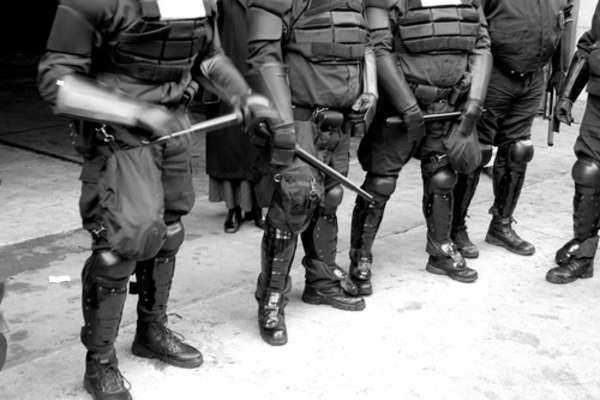
A police officer cannot target the head, chest, spine, or groin area unless the police officer needs to protect their own life. Hitting a person in these areas is dangerous and can lead to serious injuries and even death in some cases. Police officers are often trained to target vulnerable nerves and large muscles.
What are the Advantages/Disadvantages of Each Baton (law enforcement)?
Each baton (law enforcement) has its own advantages and disadvantages in tactical defense, and these characteristics are listed below:
Straight Baton
These batons are the oldest design but qualify as the most commonly used baton today. The batons come in different sizes, but some police departments do not use straight batons because they are inconvenient to carry and make the police officer look threatening.
Expandable Baton
These batons are easier to carry, makes the police officer look less intimidating, and can be used in collapsed or extended mode. Disadvantages associated with the expandable baton include taking a longer time to access the object and having the object collapse when needed the most.
📝 See Also
Side-Handle Baton
These batons offer more defensive maneuvers, especially in a knife fight. Also, the baton will not roll away, and these batons are used mostly for defense. Disadvantages of the side-handle baton include more weight compared to a straight baton and required training for some defensive maneuvers.